
Published authority precedes runtime evaluation.
The current stack separates policy review, authority publication, canonical proposal construction, deterministic evaluation, runtime mediation, and durable evidence.
Architecture diagram
Current public lines: Ledger 0.9.0, Contract Compiler 0.5.0, Proposal Normalizer 0.2.0, CRI-CORE 0.14.0 on PyPI and GitHub, Guard 0.19.0, and Cloud v0.6.0.
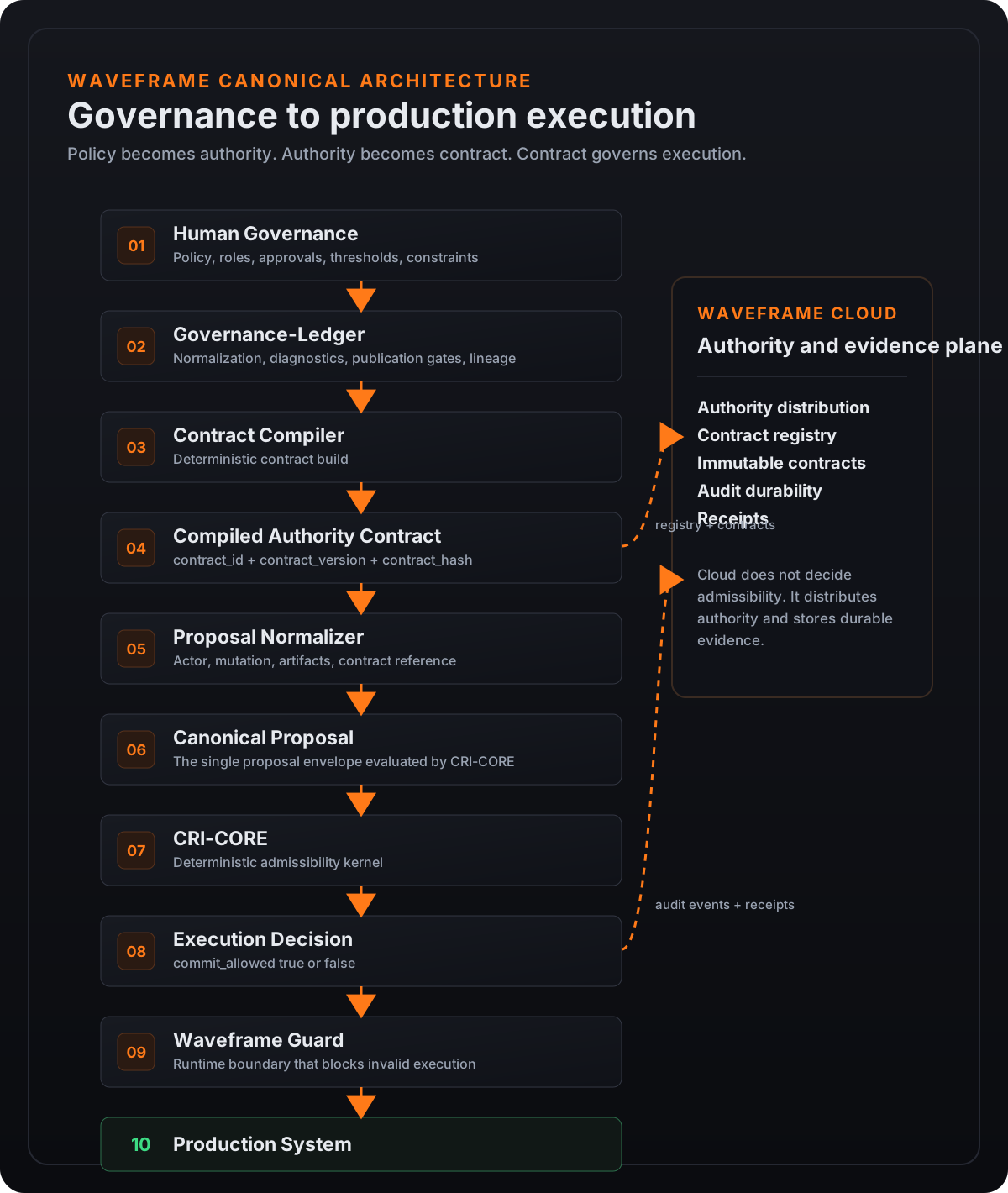
Boundary principles
Four operational flows
Authority Flow
- Source policy and intended scope enter Ledger review.
- Supported meaning is confirmed and unresolved meaning remains explicit.
- Compiler 0.5.0 produces a deterministic contract and hash, including action-specific repository scope where used.
- Ledger publishes versioned authority with commitment, receipt, and lineage.
- Cloud may distribute the tenant-scoped publication.
Proposal Flow
- An application reaches a Guard-mediated capability.
- Guard binds the actor, selected authority, action, target, and approved runtime facts.
- Proposal Normalizer creates the canonical proposal without inventing contract data.
- The proposal and matching authority move to CRI-CORE.
Execution Flow
- Guard 0.19.0 receives the mediated call.
- The selected authority is resolved and verified.
- CRI-CORE returns the admissibility result.
- Guard either ends the mediated path or invokes the approved application callback.
- Repository create and modify operations use separate action authority.
Evidence Flow
- Decision evidence is bound to actor, authority, proposal, target, and mediation context.
- Runtime evidence records the observed callback outcome.
- Cloud can preserve evidence and return package, receipt, and proof identifiers.
- Replay reconstructs logical decisions rather than claiming a new physical mutation.
Release boundary
Open package line
Guard 0.19.0, Ledger 0.9.0, Compiler 0.5.0, and Proposal Normalizer 0.2.0 are the current public package lines. CRI 0.14.0 is published on PyPI and is within Guard 0.19.0’s declared dependency range.
CRI GitHub line
CRI-CORE v0.14.0 is published on GitHub and PyPI with strict-by-default evaluation.
Cloud line
Cloud v0.6.0 is published. Its release handoff keeps production activation separate, so release publication is not presented as a completed hosted rollout.
Commercial boundary
Cloud, Console, Ledger Workspace, Guard Inspector, and multi-tenant operations remain separate from the Apache-2.0 Guard Core SDK.